Innovation in health care in many ways
Ateneo Professional School
Makati City
July 12, 2016
This is the revised schedule
Session Date Case Lecture SR
8 7/16 Mico Strategy Process/EDS 4
9 7/23 Victoria Court FS Exit/Regulations 4
10 7/30 Entrep Presentation Draft Submission 4
Mind mapping Exercise
11 8/7 - Field/Food Trip Consultation
12 8/13 Submission of Paper Closing Ceremony/Awards
For comments and suggestion
Note: Dra Burgos texted me as to whether the group's entrepreneur can be accommodated on July 23. Definitely yest. We have to make some adjustment on the SR?
Medical Innovation Forum

MBAH Entrep Class with the guests
Showing posts with label medical entrepreneurship. Show all posts
Showing posts with label medical entrepreneurship. Show all posts
Tuesday, July 12, 2016

Saturday, July 2, 2016
Saturday, June 18, 2016
More notes on case analysis
Innovation in health care in many ways
Ateneo Professional Schools
Makati City
June 18, 2016
Today, we start our long case by having the case of Jose Lontoc dissected laparascopied by the class as it were with a lead group being the chief panelist for the analysis. After a brief presentation of the relevant fact of the case, the fun begins. The group will have to engage the class in the case analysis
In case we have forgotten, let us refresh our knowledge on case analysis
Case analysis:
This is the supposed primary tool of MBA begun in Harvard. A real life situation, written by expert case writer is made. Relevant facts are embedded in the story, and the MBA student is tested to find out the relevant facts, separate the chaff from the grain and make a sense a direction from out of the story.
Thus in the days of yore, we were taught that the procedure for case analysis are as follows:
1. Objective or hypothesis setting
What is the case all about? Are you trying to sort financial, operational, hr, marketing concerns?j What is your hypothesis, theory (suspect about the case) That will make it easier for you to analyze.
This happens after the first reading
2. What is the situation (situation analysis) and relevant facts (Situation Analysis)
What is the scenario, the events in the case. Avoid doing a hindsight analysis if you know what was the sequel to the evetnt. Stay with the facts. What are the RELEVANT FACTS.? This is where discernment comes in. Be observant. This is a training for OLO (Observe, Learn Observe) Comes in. This is compared to the DX. Based on theories, and your experience, you determine what are important and what are meant to confuse you or sway you away from your theory. Eg, for dengue, and you suspect that the manifestations are of dengue, what are the patient's vitals you need to find out more? What tests would you require.
This is the analysis portion critical thinking
3. Problem Analysis
What are restraining forces that prevents the enterprise to move on.? What casues the symptom?
What needs to be corrected. Here you need to compare the sitaution with a norm or the standard (Like differential dx) You compare normal vs abnormal physiology based or levels (like in the CBC where the limits are defined)
In KT, this is the comparison between What is, (the normal) and wht is not (the current situation which could be abnormal. This is similar to car repari, where you remove a suspected part, and replace it in the meantime with a normal new part and see what happens?
4. Alternative Generation
Who says that a problem can not be solved. For every problem, there are a dozen option you can generate (This is where your creativity and critical thinking comes in.
For every lock there are keys you can use to open it.
5. Decision analysis
Here is where you make your choice of the best alternative. You measure your decision on:
1. Cost benefit analysis Is the solution more expensive than the current losses or dysfunction?
2. Relate it your overall obsjective VMOKRAPI
3. Relate it the consequences: to other departments/system, to other business unit, and now with the society (inclusivenesss)
I hope this helps you in the case analysis
Saturday, May 21, 2016
What we did at the Medical Entrepreneurship Class today
Innovation in health care in many ways
Rizal Philippines
May 21, 2016
 Our ice breaker - Dra Vilma Beltran
We had our first session today for Medical Entrepreneurship today this afternoon. Traffic was bad and it took me nearly 2 hours to reach the school. (I left 10:30 and arrived 12:30) Two students were absent.
We only managed to have the opening song, the walk through the syllabus, and the main thrust of the subject: making a business plan. The self affirmation took longer than the allotted time. Never mind because self mastery consumes but a little time in teh entire course. (Unlike in leadership where we do a lot of talking about self mastery) Of course entrepreneurship, like leadership is sharing and telling of stories as we have greater self improvement, improvement of the world and conditions of other people - continuously. It is about being better and sharing stories to the world
Welcome Doctors. I know, as I have said in the Intro to Entrep presentation, that you chose this elective not because it is easy, but because it is hard. And being hard, it is going to bring out the best in every one. And in the process, you discover the real you, and what you are capable of really achieving.
We start with the more technical side of entrepreneurship next week. We resume with the self affirmation next week, the debate, and the crime presentation by groups.


 Unica Hija and expert in IT
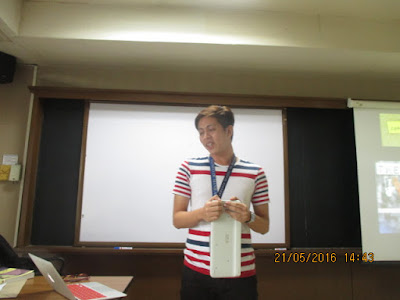 Mikee, pharma expert at DOH

 Dr Francis Ranada, the OIC of their General Hospital
 Standing up for the Song for Mary final song for the day
What we struck me is that most Doctors hold true to the Hippocrates oath that they chose to be doctors to be of service to others, to cure and to heal. not only the patients but the world as what Dr. Randa is doing - planting trees. He tied tree planting to issuance of coupons to planting of mangroe trees. Such a great idea. Dra Burgos gives free treatment to children in Abra.
I could muster more MDs to bring down health care costs and give greater access to many of our countrynen who can avail of the attention of a Western MD and modern medical care only during medical mission. In my last stint at Cebu, there were two advocates for low cost care: one a hospital administrator, and another a doctor in Dumaguete.
I wold have to look deeper into the business model of Dra Vilma Beltran who is rapidly expanding her group to build more hospitals. Doctors as builders.
I am also struck by what Dr. Serrano that he studied at AGSB to learn how to be better at being a man for others.
Rizal Philippines
May 21, 2016

We had our first session today for Medical Entrepreneurship today this afternoon. Traffic was bad and it took me nearly 2 hours to reach the school. (I left 10:30 and arrived 12:30) Two students were absent.
We only managed to have the opening song, the walk through the syllabus, and the main thrust of the subject: making a business plan. The self affirmation took longer than the allotted time. Never mind because self mastery consumes but a little time in teh entire course. (Unlike in leadership where we do a lot of talking about self mastery) Of course entrepreneurship, like leadership is sharing and telling of stories as we have greater self improvement, improvement of the world and conditions of other people - continuously. It is about being better and sharing stories to the world
Welcome Doctors. I know, as I have said in the Intro to Entrep presentation, that you chose this elective not because it is easy, but because it is hard. And being hard, it is going to bring out the best in every one. And in the process, you discover the real you, and what you are capable of really achieving.
We start with the more technical side of entrepreneurship next week. We resume with the self affirmation next week, the debate, and the crime presentation by groups.


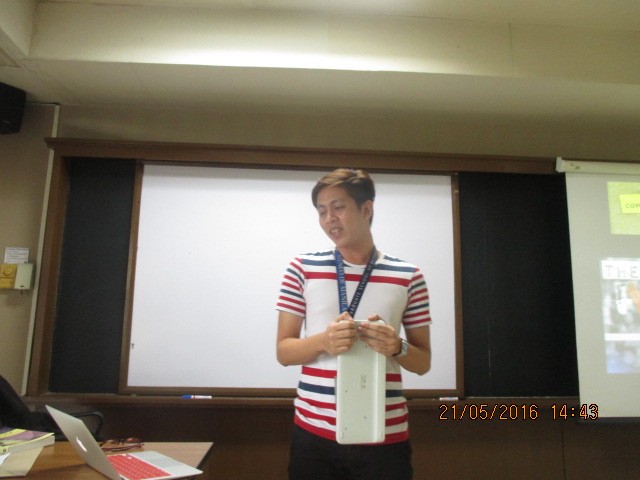


What we struck me is that most Doctors hold true to the Hippocrates oath that they chose to be doctors to be of service to others, to cure and to heal. not only the patients but the world as what Dr. Randa is doing - planting trees. He tied tree planting to issuance of coupons to planting of mangroe trees. Such a great idea. Dra Burgos gives free treatment to children in Abra.
I could muster more MDs to bring down health care costs and give greater access to many of our countrynen who can avail of the attention of a Western MD and modern medical care only during medical mission. In my last stint at Cebu, there were two advocates for low cost care: one a hospital administrator, and another a doctor in Dumaguete.
I wold have to look deeper into the business model of Dra Vilma Beltran who is rapidly expanding her group to build more hospitals. Doctors as builders.
I am also struck by what Dr. Serrano that he studied at AGSB to learn how to be better at being a man for others.
Friday, May 20, 2016
Revision in discussion of Business Plan Parts and Regular Submission of Outputs
Innovation in health care in many ways
SESSION
|
DISCUSSION
|
OUTPUT
|
2
|
Business Plan
|
|
3
|
Business Model / Objectives
VMOKRAPI
|
Topic Outline
|
4
|
Organization
Technical / Financial Mid Management
|
VMOKRAPI
|
5
|
Product Features / Differentiation
Competitive Analysis
|
Organization
|
6
|
Macro and Micro Market Data / Customer
Primary Target Market
|
Product Features
Competitive
Analysis
|
7
|
Sales Estimate / Forecast
|
Macro and Micro
market
|
8
|
ITO, Strategy
SPATRES
|
Sales Forecast
|
9
|
Financial and Cash Management
|
Strategy / SPATRES
|
10
|
Compliance with regulations
Sustainability, being green
|
Financial
Statements
|
11
|
Exit Strategy
Executive Summary
|
Compliance with
regulations
|
12
|
Exit Strategy /
Executive Summary
|
|
13
|
Submission of
drafts
|
|
14
|
Final Submission
|
Thursday, May 12, 2016
Students of Medical Entrepreneurship PM sessison
Innovation in health care in many ways
I learned from Mr. Owie Ferrer that our Class Secretary is Dr. Marvin Pangilinan? Welcome sir to be my right hand.
|
NAME OF STUDENT
|
PROFESSION
|
INSTITUTION
|
|
1. BELTRAN, Vilma Austria
|
Consultant in Pediatrics
|
St. Clair Medical Center
|
|
2. BERNAL-SUNDIANG, Nannette
|
Administrator and property manager
|
LMN Construction Devt Corp.
|
|
3. BURGOS, Delfina Milagros
|
Pediatrician / Owner
|
Clinica dela Assumption
|
|
4. CARANDANG-RECIDORO, Hazel Marie
|
Board of Directors /Chairman Dept. of Radiology
|
Unihealth Pateros Hospital
|
|
5. CARINGAL, Emma
|
Dept. Chairwoman OBGyne
|
Mary Mediatrix Medical Center
|
|
6. DONATO, Rosalyn
|
Chariman of the Board
|
MetroRizal Doctor's Hospital
|
|
7. JUNSAY, Michael
|
Pharmacist III
|
Department of health National Center for Pharmaceutical Access Mgt
|
|
8. LIM, Eleazar Jr.
|
Medical Director
|
Friendlycare Foundation Inc.
|
|
9. MARTINEZ, Jose Maria Jr.
|
Active Consultant / Ophthalmology
|
St. Lukes Medical Center
|
|
10.PANALIGAN, Jane Cleofe
|
Board Secretary
|
Allied Care Expert Medical Clinic (formerly Unihealth)
|
|
11.PANGILINAN, Marvin
|
Pharmaceutical Medicine / medical Scientific Liaison
|
Merck Sharpe & Dohme Philippines
|
|
12.MERILLO, Lorenzo
|
Department Manager
|
St. Lukes Medical Center
|
|
13.POLICARPIO, Florita
|
Owner Head / OBGyne
|
St. Therese Lying in and OB Gyne Clinic
|
|
14. RANADA, Francisco III B.
|
OIC Medical Director
|
Ranada General Hospital
|
|
15.SANTIAGO, Charis
|
Medical Director
|
Grace Mission Hospital
|
|
16.SERRANO, Crisostomo Jr.
|
Medical Staff
|
Seamans Hospital / Davao Hospital
|
|
17.TAGUBA, Katrina Louise
|
Emergency Medicine
|
The Medical City
|
|
18.TELLO, Evelyn
|
Medical Officer IV
|
Baguio General Hospital
|
|
19.TORRALBA, Lindsay Gail
|
COO and CFO
|
Wilson Ayache Medical Aesthetics Clinic
|
|
20.VELASCO, Dominic
|
Consultant
|
UST Hospital/Rizal Med. Center / Cardinal Santos
|
|
21.SEMON, Kimberly Joy
|
Junior Scientist/Quality Leader
|
Makati Medical Center
|
Wednesday, May 11, 2016
Medical Entrepreneurship Syllabus
Innovation in health care in many ways
Course syllabus and schedule:
Sessions:
1. Introduction to the course. Definition of entrepreneur (debate)
Mastery of self
2. Traits of an entrepreneur: mastery of self/Ignatian/Heroic leadership
3. Ds and Fs of enterpreneur
Mastery of opportunity
1. Opportunities: identifying, screening, seizing
2. Creativity, opportunities in medical field, medical entrepreneurship.
Start of submission for bp - topic and concept
Mastery of enterprise
3. Business planning, business model
4. Goal Setting VMOKRAPI - Business model submission
5. External environmnent, regulatory framework – VMOKRAPI
6. Sales Estimate; micromarket study, PTM - External Environment/EFE
7. Strategies: in house, outsourcing, franchising ITO - Sales Estimate
8. Finance - Genesis of Enterprise, debit, credit, Strategy
9. CTRP of 1997: BIR and you; Case analysis - Financial Statements
10. Case Analysis
11. Field visit of an enterprise (micromarket study)
12. Guest entrepreneur
13. Guest entrepreneur - BP draft submission
14. Social entrepreneurship
15. Medical entrepreneurship - Final BP submission


GRADING SYSTEM:
Individual Weight
NU 12 10 points
Special Report 10 points
Business Plan 30 points (Should not be less than 40 pages)
Case Analysis 10 Points
ST 60
ST 60
Group
Presentation 15 points ( Crime, Micromarket, Process Analysis)
Entrepreneur 25 points
ST 40
Total 100 points
ST 40
Total 100 points
Explanation of the assignments and grading system
Individual:
1. NU 10: 10 points 10 new ideas. This fosters creativity and inventiveness - 10pts.
These are new ideas arising from gaps in the wants and needs of the market and from what pisses you off.
Describe the situation, what is wanting and lacking, then the innovation and its advantages and benefits. Describe how the process for implementing the innovation/new ideas
Past projects are welcome
This is to be sent/uploaded to : profjorge.entrep.innovation@blogger.com weekly on or before the session date.
2. Case analysis - 10%. Oral recitation: This is a test of critical and analytical
thinking. This is about research and data collection and proving and disproving the hypothesis to the problem. This tests the ability of the student to relate to the goal/vision of the enterprise or entrepreneur. This is about relevance and focused thinking. No written report is required
3. Special report - 10% This is a five minute, at least 30 pages PPT presentation on the topic that was assigned (related to the topic of the session)/preferred by the student. The presentation is to be graded according to the rubric. It is suggested that the class create an account at Slideshare and that the report be uploaded to the said site. The class sec shall schedule the SR presentation
Menu of topics for the Special Report
- Self-Mastery
a. Ignatian Leadership
b. Leadership from within
c. Attitude is Everything
d. Are doctors meant to be entrepreneurs?
e. How to foster creativity
f. Critical / Analytical Thinking
g. The Harvardian Method / Case Analysis
2. Mastery of Opportunity
a. Innovation in Healthcare (Global)
b. Local Opportunities in Health Care
c. Driving Forces of Growth in Health Care in the Philippines (HMO and Philhealth)
How long will they last?
d. Go Negosyo
e. IT and Health Care
f. Advances in Stem Cell Theraphy
g. Advances in Medicinal Technology / Pharmacology
- Mastery of the Enterprise
- Aravind Hospital (The McDonald of Eye Care in India)
- Dr. Devi Shetty, Philanthropist and Heart Surgeon, Founder Of Narayana Hrudayalaya Hospital
- Ayurvedic medicine
- Non – traditional Medicine (An answer to the growing health care cost in the Philippines?)
- The Ten Dollar Dialysis (Narayana Hospital)
- The Business Model by Alexander Osterwalder
- Start Ups
- Global Entrepreneurship
- Business plan - 30%. This is a major requirement of the course. The students are required to submit outputs that every session. as stipulated in the syllabus. The students should be able to submit a BP at the last session of the course. It should be at least 40 pages long A1, 12 points, font Arial double space, with table of contents and pagination
Of the 30 points, the student will be graded with 5 points based on his regular submission of outputs for the BP on the day they are due.
Failure to submit the BP means that the student get an INC grade, which could lead to a 1 grade if not submitted.
The student will not be graded on attendance because he will be unable to submit outputs if he does not attend the class.
Subtotal: 60 points
Group work:
1. Invitation of the guest entrepreneur. 25%
The entrepreneur is a living proof a walking lesson on entrepreneurship. If the group can bring him in the class, the group gets a four. The group takes care of his certificate, gifts, parking and other tokens for the guest.
2. Group work 15%
1. Planning a crime
2. Micro market study:
Study two fast food outlets:
Compare and describe:
1. Customer behavior (how are they using the outlets)
2. Estimated profile of the customer: age, sex, appearance etc. Sorry no MR or
formal customer profiling interview
3. Physical facilities, pricing, level of service, staff appearance and, cleanliness,
speed, food taste
3. Input, throughput, output study of a micro enterprise:
Study a food street cart: describe the food/service being rendered, describe the
inputs, and the process, the cost, vs the outputs (the product) How do they match up (place the ITO diagram)
Submission of assignments:
- All group work are to be submitted /uploaded to :
profjorge.entrep.medentrep@blogger.com
Drafts of the business plan are to be submitted to this site:
To view the posting, please view/click
2. NU 12 assignments are to be sent uploaded to:
To view the posting, please view/click
Subscribe to:
Posts (Atom)